Bath Rug vs Bath Mat: Which One Do You Actually Need?
Prices and picks verified as of September 2026. Independent, reader-supported reviews.

Contains affiliate links (disclosure) — we earn a commission if you buy, at no extra cost to you.
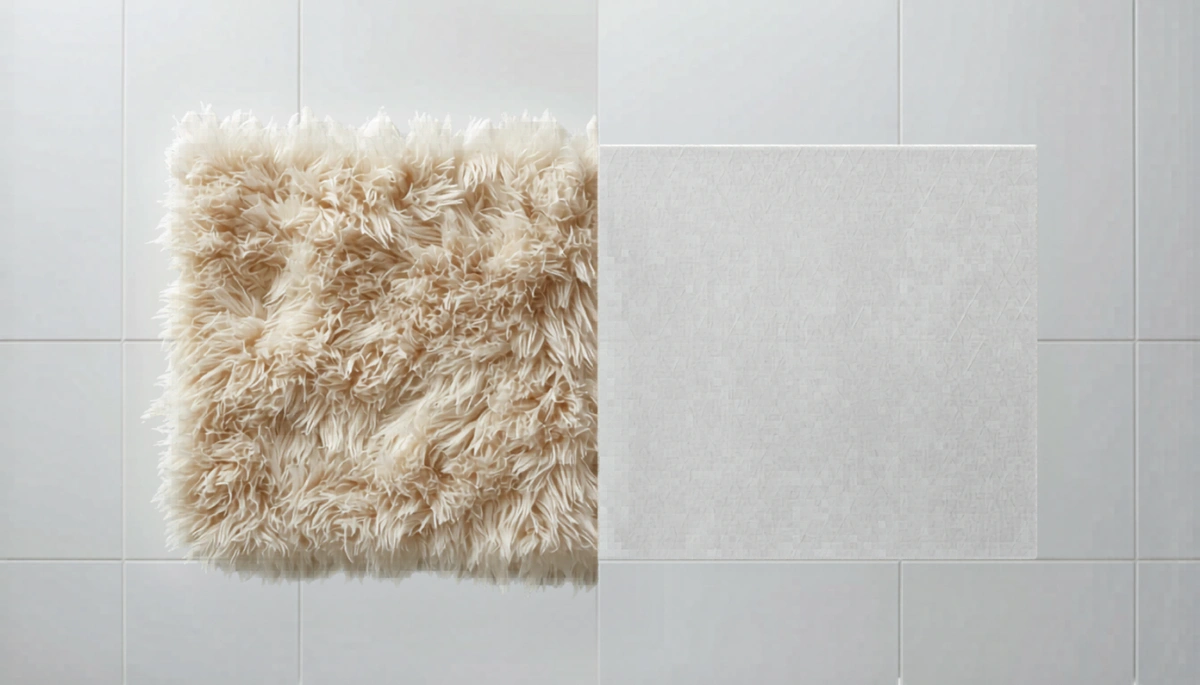
Things to Know
- Bath rugs and bath mats are not interchangeable. They solve different problems in different locations within the same bathroom.
- A bath rug goes outside the tub for comfort and absorption. A bath mat goes inside the tub (or on the floor) for safety and water management.
- For most bathrooms, the answer is not "rug or mat" -- it is both. One inside the tub, one outside.
- The right choice depends on your floor surface, who uses the bathroom, and how much ventilation you have.
The Quick Verdict
If you are choosing between a bath rug and a bath mat because you can only buy one, get the bath rug. Most people shopping for bathroom floor textiles need something outside the tub: a soft, absorbent surface to step onto after showering. That is what a bath rug does. A bath mat is for inside-the-tub safety or for hard-surface alternatives like stone and bamboo.
If you can buy both, do. The safest bathroom setup is a suction-cup rubber mat inside the tub and a non-slip chenille or memory foam rug outside. This is particularly important in households with elderly residents, children, or anyone with mobility concerns.
Our top bath rug pick for most people is the Yimobra 36x24 at $29.99. Our top bath mat pick for in-tub safety is the WRISIN Natural Rubber Bath Mat at $13.88 .
What Is a Bath Rug?
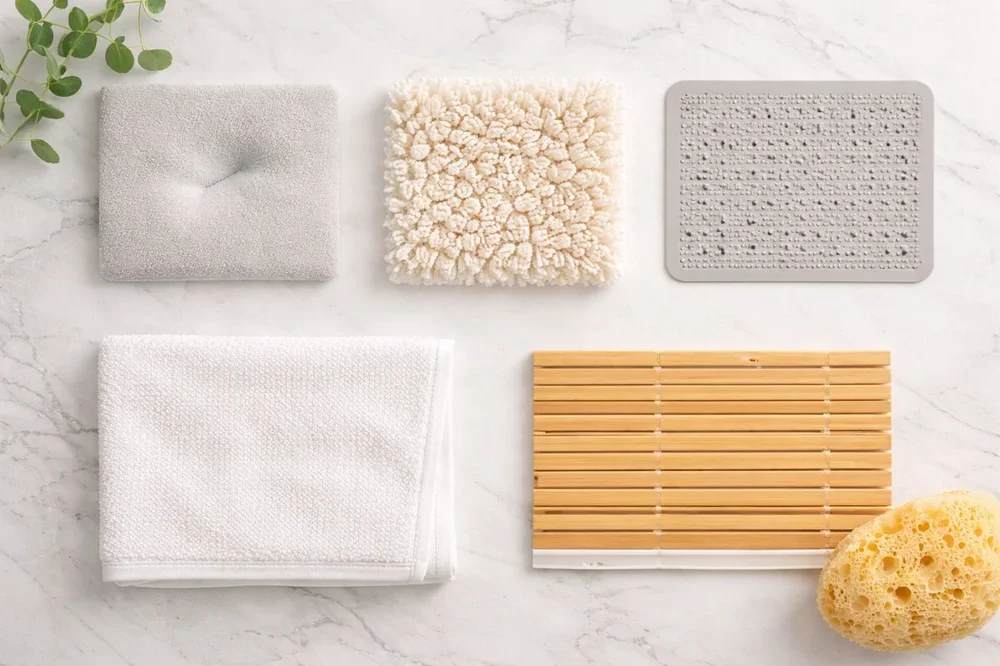
A bath rug is a soft, fabric-based textile designed to sit on your bathroom floor outside the bathtub or shower. It absorbs water from your feet when you step out, provides cushioning on cold tile, and adds a decorative element to the room. Bath rugs are made from materials like chenille microfiber, cotton, or memory foam, and they typically have a non-slip backing to keep them in place on smooth floors.
Bath rugs are not waterproof. They absorb water into their fibers, which means they need regular washing and proper drying to prevent mold and odor. They range in price from about $9 for a budget chenille option like the Gorilla Grip to $50+ for premium cotton or memory foam options. Most quality bath rugs last 1-3 years depending on material and care. Our materials guide covers the durability differences between cotton and microfiber in detail.
What Is a Bath Mat?
A bath mat is a functional surface designed primarily for safety and water management. Bath mats come in several categories, and the differences matter significantly.
Rubber bath mats with suction cups go inside the bathtub or shower floor. They prevent slipping on wet porcelain or fiberglass surfaces. These are safety devices, not comfort products. The WRISIN Natural Rubber Mat is the type-example: it has 241 suction cups, weighs less than a pound, and exists solely to keep you from falling.
Stone bath mats (diatomaceous earth or natural stone) sit on the bathroom floor and absorb water through their mineral surface. They dry extremely fast -- often within minutes -- and resist mold completely. They are rigid, cold to the touch, and provide no cushioning. They last 3-5+ years. They are the right choice for humid bathrooms where mold is a persistent problem.
Bamboo bath mats are slatted wood platforms that drain water through gaps between the slats. Water falls through rather than being absorbed. They resist mold, dry almost immediately, and can last 5-10 years. They provide no cushioning and no absorption -- the water goes to the floor beneath the mat. See our bamboo bath mat recommendations.
Side-by-Side Comparison
| Feature | Bath Rug | Bath Mat |
|---|---|---|
| Primary purpose | Comfort + absorption outside tub | Safety inside tub / water management |
| Placement | Bathroom floor only | Inside tub or bathroom floor |
| Materials | Chenille, cotton, memory foam | Rubber, stone, bamboo, PVC |
| Comfort | Soft, warm, cushioned | Rigid, cool, functional |
| Safety | Non-slip backing (varies) | Suction cups / weight-based stability |
| Water handling | Absorbs into fibers | Drains through or sits on surface |
| Drying time | 3-8 hours depending on material | Minutes (stone/bamboo) to 1 hour (rubber) |
| Mold risk | Moderate to high without proper care | Low to none |
| Lifespan | 1-5 years depending on material | 2-10 years depending on type |
| Price range | $9 - $90 | $10 - $50 |
| Aesthetics | Decorative, many colors/styles | Functional, limited styling |
| Maintenance | Machine wash every 1-2 weeks | Rinse and air dry (rubber); wipe down (stone) |
Material and Construction
Bath rugs and bath mats are built from fundamentally different materials because they solve different problems. Bath rugs use soft, absorbent fibers. The most common materials are chenille microfiber (used in the Gorilla Grip, Yimobra, and Muddy Mat), cotton (natural fiber, longer-lasting but slower to dry), and memory foam (cushioned, heavier, slowest to dry). Each material has different tradeoffs that we cover in our cotton vs microfiber comparison and memory foam vs chenille guide.
Bath mats use rigid or semi-rigid materials. Rubber mats for inside the tub are thin, flexible, and designed to suction onto smooth porcelain. Stone mats use diatomaceous earth or similar minerals that absorb water through their surface and release it through evaporation. Bamboo mats are slatted platforms that let water drain through. None of these materials provide the softness or warmth of a bath rug, and they are not designed to.
Comfort
This comparison is one-sided. Bath rugs are comfortable. Bath mats are not, and they are not trying to be. If you want something soft underfoot when you step out of the shower, you want a bath rug. A stone mat will be cold and hard. A bamboo mat will be hard with slight flex. A rubber in-tub mat is thin and functional.
The comfort differences within the bath rug category are meaningful, though. Memory foam provides the most cushioning but dries the slowest. Chenille is soft and springy with fast drying. Cotton feels natural and substantial but takes longer to dry than chenille. For most people, chenille is the comfort-to-practicality sweet spot.
Durability and Maintenance
Bath mats generally outlast bath rugs significantly. A stone mat can last 3-5+ years with no maintenance beyond occasional wiping. A bamboo mat can last 5-10 years. A rubber in-tub mat lasts 1-2 years before the suction cups lose their grip.
Bath rugs need active maintenance. You should wash them every 1-2 weeks, hang them to dry after heavy use, and expect to replace them every 1-5 years depending on material. Cotton rugs last the longest (3-5 years), followed by quality chenille (2-3 years for premium, 1-2 years for budget). See our washing guide for detailed care instructions.
If you hate doing laundry and want something that requires zero maintenance, a stone or bamboo mat is the practical answer. If you value comfort enough to accept a regular washing routine, a bath rug is worth the effort.
Safety
For in-tub safety, there is no substitute for a proper bath mat with suction cups. Bath rugs do not go inside tubs. They are not designed for it, they would become waterlogged, and they would become a slipping hazard.
For outside-the-tub safety, bath rugs with non-slip backing (TPR or rubber) provide adequate grip on smooth floors. The Yimobra and Gorilla Grip both held position on wet ceramic tile in our push tests. Stone and bamboo mats stay in place through their own weight. On textured floors, heavier mats and rugs with full rubber backing perform better than TPR spray-dot patterns.
For elderly users or anyone with mobility concerns, the safest setup is a rubber mat with suction cups inside the tub AND a memory foam or chenille rug with strong non-slip backing outside. This is not a choice between one or the other -- it is both.
Mold and Humidity
Bath rugs absorb water into their fibers, which creates a mold risk in humid bathrooms. Chenille dries faster than cotton, and both dry much faster than memory foam. In a bathroom with good ventilation (a working exhaust fan or an open window), mold is manageable with regular washing. In a bathroom without ventilation -- a windowless interior room with no fan -- fabric rugs are a persistent mold risk.
Bath mats made from stone, bamboo, or rubber are effectively mold-proof. Stone absorbs and evaporates water within minutes. Bamboo does not absorb water at all. Rubber dries quickly and does not support mold growth. If your bathroom has chronic humidity problems, a non-fabric bath mat eliminates the mold variable entirely. Our quick-dry rug guide covers the best options for humid spaces.
Our Picks
Bottom line: the 2 products covered here run $16.18 to $33.99. The cheapest is the WRISIN Bathtub Mat Non Slip with Suction Cups - 100% Rubber at $16.18.


Yeaban Teal Chenille Bath Rug 17x24
Soft, plush, and an excellent entry point for bath rugs
Check Price on Amazon


WRISIN Non Slip Natural Rubber Bathtub Mat
241 suction cups for reliable in-tub safety
Check Price on AmazonHow to Decide: If X, Choose Y
Choose a Bath Rug if...
You want something soft and warm outside the tub. You are willing to wash it regularly. Your bathroom has reasonable ventilation. Comfort is a priority.
Start here: Yimobra 36x24 ($29.99) for full coverage, or Gorilla Grip ($9.39) for budget.
Choose a Bath Mat if...
You need in-tub safety (rubber with suction cups). Your bathroom has persistent mold problems (stone or bamboo). You want zero maintenance (stone). You prefer a hard surface underfoot.
Start here: WRISIN Rubber Mat ($14.99) for in-tub safety, or see our bamboo mat recommendations.
Get Both if...
You have elderly residents, children, or anyone with mobility concerns. You want the safest possible bathroom setup. You can afford $25-$45 for both.
What is the main difference between a bath rug and a bath mat?
A bath rug is a soft fabric (chenille, cotton, memory foam) for comfort outside the tub.
Can you use a bath rug inside the bathtub?
No.
Frequently Asked Questions
What is the main difference between a bath rug and a bath mat?
A bath rug is a soft fabric (chenille, cotton, memory foam) for comfort outside the tub. A bath mat is a functional surface (rubber, stone, bamboo) for safety inside the tub or water management on the floor. They solve different problems.
Can you use a bath rug inside the bathtub?
No. Bath rugs are not designed for inside the tub. They would become waterlogged and create a slipping hazard. Use a rubber bath mat with suction cups inside the tub.
Which is safer for elderly people?
Use both: a suction-cup rubber mat inside the tub and a non-slip bath rug (memory foam or chenille with TPR backing) outside. This is the safest configuration for any household with mobility concerns.
Do bath rugs get moldy faster than bath mats?
Generally yes. Fabric retains moisture. Stone, bamboo, and rubber do not. If mold is a concern, either choose a non-fabric mat or commit to hanging your bath rug to dry after each use and washing it every 1-2 weeks.
How often should you replace a bath rug vs a bath mat?
Bath rugs: 1-5 years depending on material (budget chenille ~1 year, premium cotton ~5 years). Bath mats: rubber 1-2 years when suction cups wear; stone 3-5+ years; bamboo 5-10 years.
Related Reading
Outfitting a full bathroom? The best bathroom vanities guide on our sister site covers the next piece of the puzzle.
Affiliate disclosure: Best Bath Rugs earns a small commission on purchases made through links in this article, at no additional cost to you. We compared these products independently and were not paid by any manufacturer. See our full disclosure policy.