Best Bath Rug Material 2026: Memory Foam vs Cotton vs Chenille
This article contains affiliate links. We may earn a commission at no cost to you. Full disclosure.

Things to Know
- For most people, chenille is the best all-around material: it is soft, dries quickly, washes easily, and costs less than memory foam.
- Memory foam provides the best underfoot comfort, but it dries slowly and requires more careful washing to avoid ruining the foam core.
- Cotton is the most forgiving to wash (hot water, any cycle) but absorbs the most water and takes the longest to dry among fabric options.
- The "best" material depends on your bathroom. Humid bathrooms need quick-dry materials. Cold floors benefit from thick memory foam. High-traffic family baths need something machine-washable and durable.
Why Material Matters
What bath rug material holds up best to daily washing? Chenille and microfiber survive the most wash cycles before noticeable degradation — typically 100+ machine washes versus 50-75 for memory foam covers and 30-50 for thick cotton. Cotton is the most forgiving to wash (any temperature, any cycle) but absorbs the most water and wears thin first. The right pick depends on whether you prioritize wash-cycle longevity, drying speed, or underfoot comfort.
The material of your bath rug determines how it feels underfoot, how much water it absorbs, how quickly it dries, how easy it is to clean, and how long it lasts. Those five factors interact differently depending on your bathroom. A thick memory foam rug that feels heavenly in a well-ventilated master bath becomes a mold magnet in a windowless guest bathroom with no exhaust fan.
Most bath rug shopping guides rank materials on comfort alone. That is not how real decisions work. You need a material that handles your bathroom's moisture level, fits your washing routine, and survives the amount of foot traffic it will see. This guide compares the five most common bath rug materials on the metrics that actually matter.
Quick Comparison Table
| Material | Comfort | Absorbency | Dry Time | Washability | Durability | Price Range |
|---|---|---|---|---|---|---|
| Memory Foam | Excellent | High | Slow | Delicate | Moderate | $15-45 |
| Chenille | Very Good | High | Fast | Easy | Good | $10-30 |
| Cotton | Good | Very High | Slow | Very Easy | Excellent | $12-50 |
| Microfiber | Good | Moderate | Very Fast | Easy | Good | $8-25 |
| Bamboo | Firm | N/A (drains) | Instant | Wipe Down | Excellent | $20-60 |
Memory Foam vs Cotton Terry: Which Is Better?
The two materials people compare most often are memory foam and cotton terry — and they answer different questions. Memory foam wins on underfoot comfort: a dense 0.5-1 inch foam core cushions joints and feels closer to a spa mat than a rug. Cotton terry wins on washability and absorbency: thick looped cotton soaks up water faster than any other fabric and tolerates hot wash cycles that would ruin foam. The headline tradeoff is drying time. Cotton holds water longer than chenille or microfiber but air-dries fully on a towel bar within 6-12 hours. Memory foam holds water in the foam core for 24+ hours, which makes it a bad fit for humid bathrooms without an exhaust fan.
For a household that prioritizes daily wash-and-go simplicity, cotton terry is more practical. For a master bath where comfort beats laundry frequency, memory foam is the upgrade. Households split the difference with chenille — see the side-by-sides below.
Memory Foam: Best for Comfort
Memory foam bath rugs have a dense foam core (usually 0.5-1 inch thick) wrapped in a fabric cover, typically velvet or polyester. When you step on one, the foam molds to your foot and springs back slowly after you step off. It is the closest thing to a spa experience in a standard bathroom.
The comfort advantage is real and measurable. Memory foam distributes weight more evenly than any other bath rug material, which is why it is popular with people who have joint pain or spend time standing at the vanity. If comfort is your primary concern, nothing else matches it.
The trade-off is maintenance. Memory foam holds water deep in its core, and that moisture takes hours to fully evaporate. In a bathroom with poor ventilation, a memory foam rug that gets soaked daily can develop mold within a week. Washing is also more involved: you should never machine wash the foam core itself, only the cover (on models that have a removable cover). See our washing guide for material-specific instructions.
For a detailed look at the best options, our 7 best memory foam bath rugs roundup covers the models that handle moisture better than average.
Chenille: Best for Most People
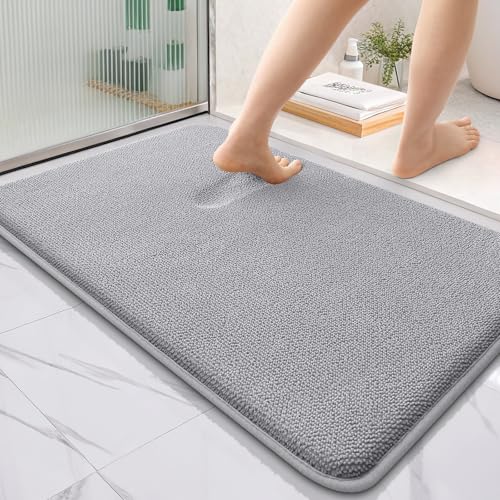
Chenille is a construction technique, not a fiber type. Chenille bath rugs are made by twisting short fibers around a core thread, creating the fuzzy, caterpillar-like strands that give the material its name (chenille means "caterpillar" in French). Most chenille bath rugs use polyester or a polyester-cotton blend as the base fiber.
What makes chenille practical for bathrooms is its combination of softness and fast drying. The twisted strand construction means water sits on the surface of the fibers rather than soaking deep into a core (like memory foam). A chenille rug hung over a towel bar after a shower typically dries within a few hours, even in moderately humid conditions.
Chenille also washes easily. Cold water, gentle cycle, air dry or low tumble dry. The main care concern is shedding: new chenille rugs shed loose fibers during the first few washes. This tapers off quickly but can be annoying if you wash the rug with other laundry. Wash it alone for the first 2-3 cycles.
For a head-to-head comparison with memory foam, see our memory foam vs chenille breakdown. For the top picks, our best chenille bath rugs guide covers the options worth buying.
Cotton: Best for Easy Washing
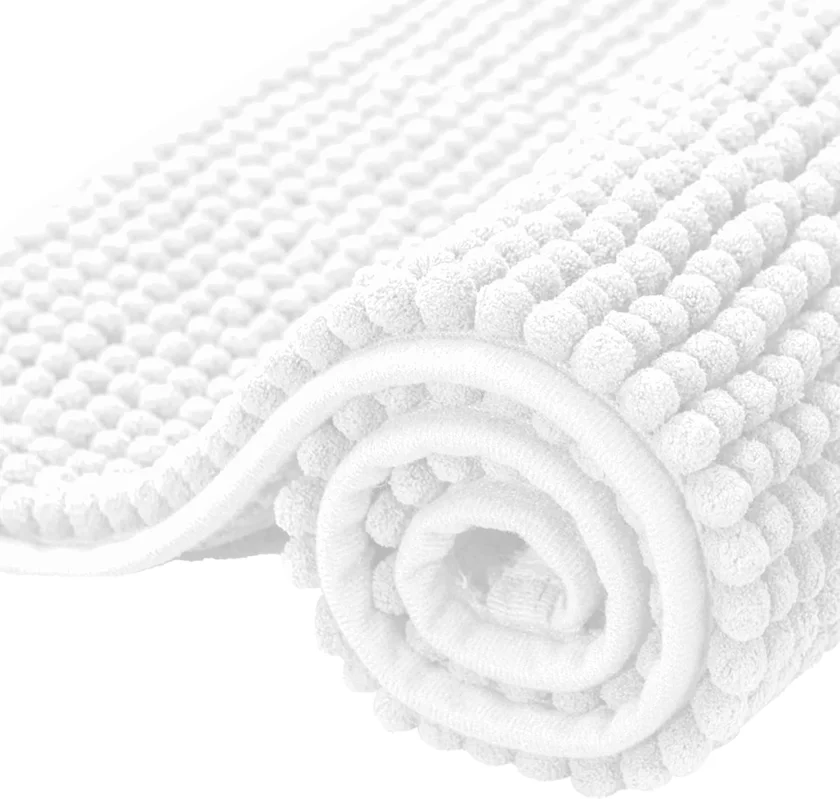
Cotton bath rugs are the simplest option. They work like a thick towel for your floor. The fibers absorb water aggressively, they tolerate hot water and strong detergents without damage, and high-quality cotton rugs can last for years with regular washing.
The downside of cotton's absorption power is its drying time. A thick cotton bath rug can hold several times its weight in water, and releasing all that moisture takes a long time. In a bathroom without good airflow, this is a mold risk. According to the EPA's guide on mold and moisture, mold can begin growing on a damp surface within 24-48 hours, and a saturated cotton rug in a closed bathroom easily stays damp that long.
Cotton also tends to be flatter and less plush than chenille or memory foam. Woven cotton rugs have a low pile that does not feel as luxurious underfoot. Tufted cotton rugs are thicker but still firmer than synthetic alternatives. If you want warmth and cushion, cotton is not the first choice.
Where cotton shines is durability and wash resilience. You can wash a cotton rug on a warm or hot cycle, use bleach on white cotton, and tumble dry on medium heat without worrying about damaging the material. No other bath rug material is this forgiving in the laundry. For comparisons with synthetic options, see our cotton vs microfiber guide.
Microfiber: Best for Humid Bathrooms
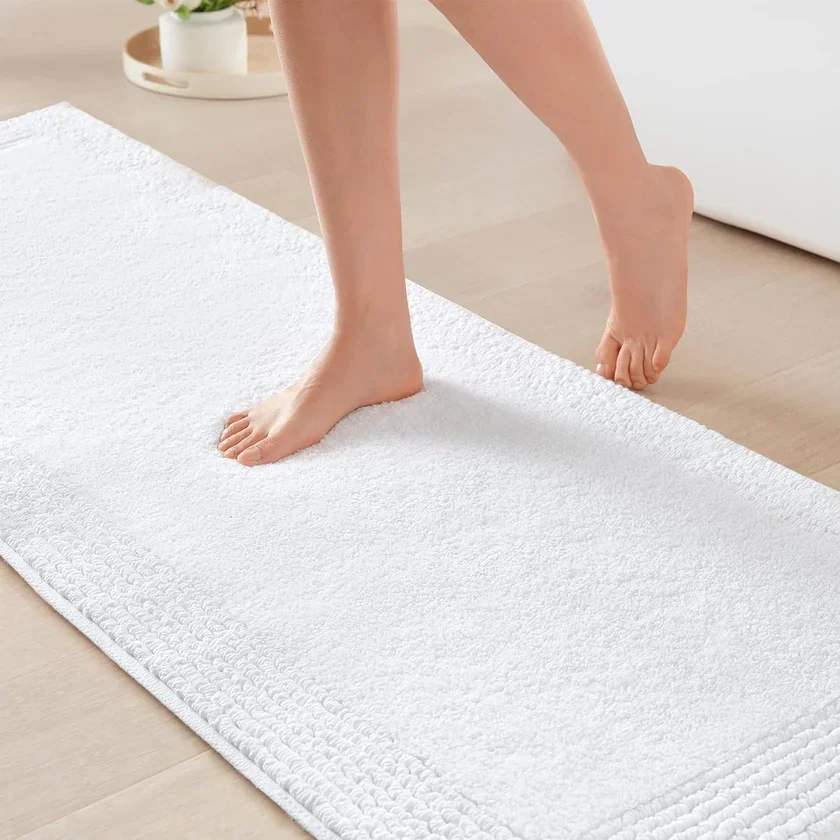
Microfiber bath rugs use extremely fine synthetic fibers (typically polyester or nylon, each fiber thinner than a human hair) woven into a dense mat. The ultra-fine fibers create a large surface area relative to the rug's thickness, which gives microfiber two standout properties: it absorbs water quickly on contact, and it releases that water just as quickly during drying.
For humid bathrooms with poor ventilation, microfiber is arguably the most practical material. A microfiber rug hung over a towel bar after use can dry in 1-2 hours, even in moderate humidity. That fast turnaround means the rug spends less time damp, which dramatically reduces the risk of mold and musty odors.
The trade-off is feel. Microfiber is smooth rather than plush. It does not have the cushioning depth of memory foam or the textured softness of chenille. Stepping onto a microfiber rug after a hot shower feels functional rather than indulgent. For some people, that is perfectly fine. For others, it misses the point of having a bath rug at all.
Microfiber is also the most affordable material on average. Budget-friendly options from brands like OLANLY start under $10 for a standard 20x32 size, making it a low-risk choice if you are not sure what material you prefer. For the best options, see our best microfiber bath rugs roundup. If humidity is your primary concern, our quick-dry bath rugs for humid bathrooms guide covers microfiber and other fast-drying options.
Bamboo: Best for Zero Maintenance
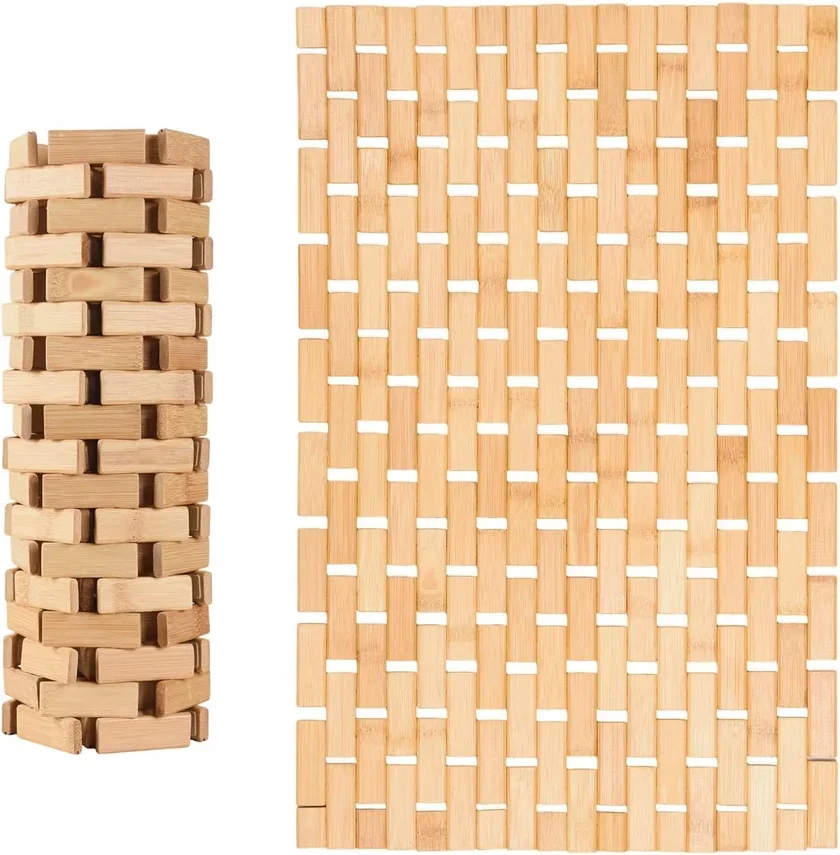
Bamboo bath mats are not fabric at all. They are slatted wooden platforms (typically 0.5-1 inch thick) made from bamboo strips connected by silicone, rubber, or string. Water runs through the slats and evaporates from the floor underneath. There is nothing to absorb, nothing to wash, and nothing to grow mold in.
The hygiene advantage is significant. Bamboo is naturally antimicrobial, and because water drains rather than being absorbed, there is no damp material for mold or bacteria to colonize. For bathrooms that struggle with persistent rug odor despite regular washing, switching to bamboo eliminates the problem entirely.
The compromise is comfort. Bamboo is a hard surface. There is no give, no cushion, and no warmth. In winter, stepping onto a bamboo mat feels cold. For people with foot pain or anyone who expects a soft landing after a shower, bamboo will be disappointing. It also requires a flat floor surface; bamboo mats on uneven tile can rock or crack at the joints.
For a complete look at the best options and when bamboo makes sense over fabric, see our best bamboo bath mats guide. For help deciding between the two categories, our bath rug vs bath mat comparison breaks down the decision.
Material and Backing: The Hidden Interaction
The material on top of your rug gets all the attention, but the backing underneath determines safety and longevity. Different top materials pair with different backing types, and some combinations work better than others.
Memory foam rugs almost always have PVC or TPR (thermoplastic rubber) backing because the foam layer needs a waterproof base to prevent moisture from seeping through to the floor. Chenille and microfiber rugs use either latex-coated fabric or TPR dot backing. Cotton rugs may have no backing at all (woven cotton) or a latex/rubber coating.
If your bathroom has tile floors, TPR backing provides the best grip. Latex works well on dry tile but can slip when wet. Rugs with no backing should always be used with a separate non-slip rug pad on tile. For details on the safety implications, especially for older adults and children, see our non-slip bath rugs for safety guide.
How to Choose by Bathroom Type
| Bathroom Type | Primary Concern | Recommended Material | Why |
|---|---|---|---|
| Humid / no fan | Mold prevention | Microfiber or Bamboo | Fastest drying / zero absorption |
| Master bath (well-ventilated) | Comfort | Memory Foam | Best underfoot feel, ventilation handles drying |
| Family / shared bath | Durability, easy washing | Chenille or Cotton | Handles heavy use and frequent washing |
| Guest bath | Appearance, low maintenance | Chenille | Looks good, dries between infrequent uses |
| Kids' bath | Safety, washability | Chenille with TPR backing | Soft, non-slip, easy to wash frequently |
| Rental / temporary | Budget | Microfiber | Cheapest per rug, still functional |
The Size Factor
Material choice becomes more important as rug size increases. A small 17x24 rug in any material will dry reasonably fast and fit in any washing machine. A 24x60 runner in the wrong material creates real problems.
Large memory foam rugs (24x40 and up) are heavy, take a long time to dry, and may not fit in a standard residential washer. Large cotton rugs have the same drying issue. If you need a big rug, chenille or microfiber are the more practical choices. For a detailed breakdown of sizing considerations, see our bath rug size guide.
Care Requirements by Material
| Material | Water Temp | Cycle | Dryer Safe? | Wash Frequency |
|---|---|---|---|---|
| Memory Foam | Cold only | Gentle (cover only) | No (air dry) | Every 1-2 weeks |
| Chenille | Cold or warm | Gentle | Low heat or air dry | Every 1-2 weeks |
| Cotton | Warm or hot | Regular | Yes, medium heat | Weekly |
| Microfiber | Cold or warm | Gentle | Low heat | Every 1-2 weeks |
| Bamboo | N/A | N/A (wipe down) | N/A | Wipe weekly |
For complete washing instructions by material type, see our complete bath rug care guide. If you are dealing with odor issues regardless of material, our smell troubleshooting guide covers solutions for every material type.
Looking for a new bath rug?
What is the best bath rug material?
For most people, chenille offers the best balance of comfort, absorbency, quick drying, and easy maintenance.
What bath rug material holds up best to daily washing?
Chenille and microfiber survive the most wash cycles before noticeable degradation — typically 100+ machine washes on a gentle cycle, versus 50-75 for memory foam covers and 30-50 for thick cotton terry.
Frequently Asked Questions
What is the best bath rug material?
For most people, chenille offers the best balance of comfort, absorbency, quick drying, and easy maintenance. If comfort is your top priority, memory foam is better. If easy washing matters most, cotton is the most forgiving. The right choice depends on your bathroom's ventilation, your washing habits, and your comfort preferences.
What bath rug material holds up best to daily washing?
Chenille and microfiber survive the most wash cycles before noticeable degradation — typically 100+ machine washes on a gentle cycle, versus 50-75 for memory foam covers and 30-50 for thick cotton terry. Cotton is the most forgiving on wash settings (it tolerates hot water and any cycle) but the looped pile wears thin first. For a household that washes the bath rug weekly, chenille hits the right balance of softness and durability over time.
Best bath rug material for frequent washing — which lasts longest?
For frequent washing, the longest-lasting bath rug material is densely-woven chenille with a sewn rubber backing — the polyester or polyester-cotton fibers resist matting through 100+ wash cycles, and the rubber backing stays attached longer than glued backings. Microfiber is a close second. Avoid memory foam if you wash weekly: the foam core compresses unevenly and the cover separates from the core within 12-18 months of frequent washing. See our washing guide for material-specific instructions that extend lifespan.
Is memory foam or chenille better for a bath rug?
Chenille dries faster, weighs less, and is easier to machine wash. Memory foam is softer underfoot and provides better cushioning. For humid bathrooms or households that wash rugs frequently, chenille is more practical. For comfort-focused master baths with good ventilation, memory foam is worth considering. See our full comparison for details.
Are bamboo bath mats better than fabric rugs?
Bamboo mats drain water instantly and never develop mold or odor, making them ideal for humid bathrooms. However, they are hard underfoot, cold in winter, and can be slippery when wet. Fabric rugs are more comfortable for most people but require regular washing. See our bath rug vs bath mat comparison for a full breakdown.
What bath rug material dries the fastest?
Among fabric options, microfiber dries the fastest (1-2 hours hung up), followed by chenille (2-4 hours). Cotton is the slowest (6-12 hours for thick cotton). Memory foam also dries slowly because the dense core retains moisture. If drying speed is your top concern, see our quick-dry bath rugs guide.
Do bath rug materials affect allergies?
Yes. Cotton and chenille can harbor dust mites if not washed regularly. Memory foam can trap allergens in its dense core. Microfiber's tightly woven fibers resist dust mite penetration better than other fabrics. Bamboo is the most hypoallergenic option since it does not absorb anything. For allergy sufferers, frequent washing matters more than material choice. Our organic and eco-friendly bath rugs guide covers options made with hypoallergenic materials.