Memory Foam vs Chenille Bath Rugs: Which Should You Buy?
Prices and picks verified as of September 2026. Independent, reader-supported reviews.
We independently review products. If you buy through our links, we may earn a commission. Learn more.


The Short Answer
- For most people, get chenille. It dries in 1-3 hours (vs. 4-8 for memory foam), survives the dryer, lasts longer, and costs the same.
- Get memory foam only if you have plantar fasciitis, arthritis, or joint pain and your bathroom has good ventilation.
- Best of both worlds: Use memory foam at the vanity (where you stand longest) and chenille at the shower exit (where absorbency matters).
- Overall score: Chenille wins 5 of 6 criteria. Memory foam wins 1 (comfort/cushioning).
Head-to-Head Comparison
We evaluated both materials on the six factors that matter most in a bathroom. Here is how they compare.
| Criterion | Memory Foam | Chenille |
|---|---|---|
| Comfort | Body-conforming cushion that distributes weight evenly. Reduces pressure on heels and arches. | Soft and pleasant, but no contouring. More of a gentle texture than real support. |
| Drying Speed | 4-8 hours. Dense foam traps moisture between layers. | 1-3 hours. Open fiber structure lets air circulate between tufts. |
| Durability | 1-3 years. Foam flattens through compression set, especially in budget models. | 2-4 years. Twisted yarn construction springs back after washing. |
| Maintenance | Cold water only, gentle cycle, no dryer ever. Air-drying takes 24+ hours. | Normal cycle, warm water, low-heat dryer. Done in an hour. |
| Absorbency | Moderate. Only the thin top fabric absorbs; the foam itself repels water. | 5-7x its weight in water. Microfiber tufts create massive surface area. |
| Price | $8-50 range | $7-45 range (comparable) |
Comfort: The One Category Memory Foam Wins
Memory foam was originally developed by NASA in the 1960s for spacecraft cushioning. In a bath rug, the foam softens under your body heat and pressure, molding to the exact contours of your feet. The result is a feeling of sinking into the rug rather than standing on top of it. Your weight gets distributed across the entire sole of your foot, which reduces the concentrated force on your heels and the balls of your feet.
This matters if you have a medical reason to care about pressure relief. People with plantar fasciitis, arthritis, or general joint pain will notice a real difference. Clinical research on viscoelastic surfaces shows they can reduce peak pressure by up to 50% compared to standard surfaces. If you spend 15 minutes at the vanity every morning doing your hair or makeup, memory foam earns its keep.
Chenille feels soft underfoot -- the tufted fibers create a gentle, massage-like sensation -- but there is no contouring. You are standing on top of the fibers, not sinking into a supportive layer. For healthy feet, that is perfectly fine. For feet that hurt, the difference is noticeable. Read our memory foam bath rug guide for our full recommendations if comfort is your top priority.
Drying Speed: Where Chenille Pulls Away
This is the criterion that tips the comparison decisively. A bath rug that stays wet breeds mold, mildew, and the musty smell that sends people searching for answers online. Chenille dries in 1-3 hours under normal conditions because air circulates freely between the tufts. Memory foam takes 4-8 hours because its dense, non-porous core traps moisture between the top fabric and the foam layer.
In a humid bathroom without a window or a strong exhaust fan, those numbers get worse. Memory foam can stay damp well into the next day. If your household runs multiple showers back to back, the rug never gets a chance to dry at all. Chenille handles that scenario because each person steps onto fibers that are already releasing moisture into the air. For humid bathrooms, chenille is not just the better choice -- it is the only responsible one.
Durability: Chenille Lasts Longer
Memory foam degrades through a process called compression set. Repeated cycles of pressure cause the foam cells to break down permanently, creating flat, unsupportive spots where you stand most often. Budget memory foam rugs flatten noticeably within 6-12 months. Even premium models rarely last beyond 3 years.
Chenille fibers are more resilient. The twisted yarn construction allows individual tufts to spring back to shape after being stepped on, and regular washing actually helps reset the fibers. A well-made chenille rug with reinforced backing holds up for 3-5 years of daily use. That is a meaningful lifespan advantage, especially considering the two materials cost about the same.
Maintenance: Chenille Is Far Easier
Both materials are machine washable, but the similarities stop there. Chenille goes in on a normal cycle with warm water and comes out of the dryer on low heat. Start to finish, you are looking at about an hour. Memory foam requires cold water only, a gentle cycle, and absolutely no dryer. Heat destroys the foam structure, causing it to crumble. Air-drying a memory foam rug takes a full 24 hours, during which your bathroom has no rug.
This matters more than people realize. A bath rug should be washed every 1-2 weeks. If the process is inconvenient, it does not happen as often as it should. A rug that is easy to maintain is a rug that actually gets maintained.
Absorbency: Chenille Soaks Up More
Chenille's defining advantage is its water absorption capacity. Thousands of microfiber tufts create an enormous combined surface area. Each fiber is about one-tenth the diameter of a human hair, creating millions of microscopic channels that pull moisture away through capillary action. A quality chenille rug absorbs 5-7 times its own weight in water.
Memory foam itself is a closed-cell material that repels water. The only absorption comes from the thin top fabric layer -- usually microfiber or coral velvet. That layer saturates quickly and cannot match chenille's capacity. If multiple people shower in sequence, chenille stays effective from the first user to the last. Memory foam's top layer is saturated after one or two uses.
A Note on Safety
Memory foam has a natural weight advantage. It weighs 2-3 times as much as a similarly sized chenille rug, which helps keep it anchored to the floor. Combined with quality TPR (thermoplastic rubber) backing, a memory foam rug is hard to shift even on wet tile. This makes it a strong option for elderly users and young children. Chenille rugs with good backing are also safe, but their lighter weight makes them slightly more prone to shifting if someone steps on the edge at an angle.
Which Should You Choose?
Get memory foam if...
- You have plantar fasciitis, arthritis, or chronic foot pain
- You stand at the vanity for 10+ minutes at a time
- Your bathroom has good ventilation (window or exhaust fan)
- You need maximum non-slip stability for elderly family members
- You do not mind air-drying after every wash
Get chenille if...
- Your bathroom is humid or poorly ventilated
- Multiple people shower back to back
- You want easy, no-fuss maintenance
- You want a rug that lasts 3+ years
- Absorbency matters more than cushioning
- You care about color and style variety
Use both if...
- You have multiple bathrooms with different conditions
- Place memory foam at the vanity for comfort, chenille at the shower for absorbency
- Master bath: memory foam. Kids' bath: chenille.
Our Picks for Each Material
Best Memory Foam Bath Rug
Bottom line: the 2 products covered here run $17.49 to $17.99. The cheapest is the Genteele Memory Foam Bath Mat Non Slip Absorbent Super Cozy at $17.49.
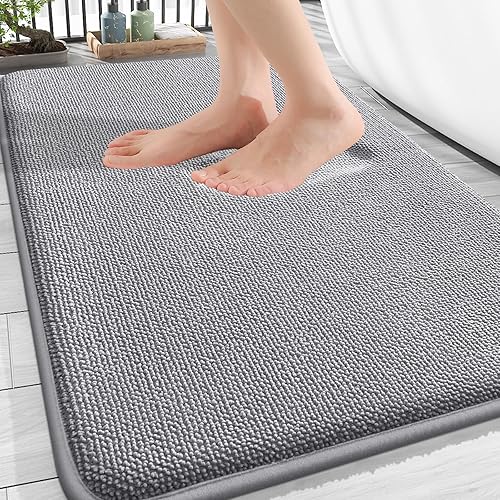


OLANLY Memory Foam Bath Rug (30x20)
Dense foam core, non-slip TPR backing, microfiber surface
Best for: Budget shoppers who want real cushioning. At under $10, it is the most accessible way to try memory foam comfort without a big commitment.
What we like
- Thick foam cushion at a budget price
- Strong non-slip backing on wet tile
- Soft microfiber top layer
Flaws but not dealbreakers
- Foam will flatten within 12-18 months
- Slow to dry (hang after every shower)
- Cannot go in the dryer
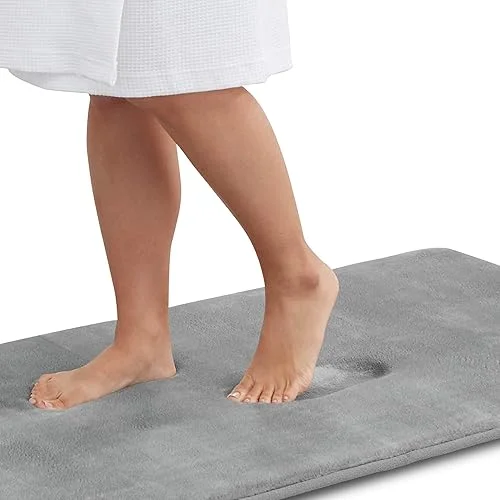


Genteele Memory Foam Bath Mat (17x24)
Coral velvet surface, dense foam, compact size
Best for: Small bathrooms where the compact 17x24 size fits better. Over 53,000 reviews confirm the quality. The coral velvet surface is noticeably softer than standard microfiber.
What we like
- Extremely well-reviewed for the price
- Coral velvet surface feels premium
- Compact size is practical for small spaces
Flaws but not dealbreakers
- Only 17x24 -- too small for some layouts
- Same drying limitations as all memory foam
Best Chenille Bath Rugs


Smiry Luxury Chenille Bath Rug (30x20)
Extra-thick microfiber chenille, quick-dry, multiple colors
Best for: The all-around best chenille rug we compared. Thick pile that still dries fast, available in a wide range of colors, and holds up well after repeated machine washes.
What we like
- Dries in under 2 hours in good ventilation
- Machine wash and dryer safe (low heat)
- Wide color selection for decor matching
Flaws but not dealbreakers
- Lighter weight than memory foam (less anchored)
- No cushioning support for joint pain


FRESHMINT Chenille Bath Rug (24x17)
Dense tufts, strong non-slip backing, compact size
Best for: Powder rooms and small bathrooms. Dense tufts combined with strong backing make it one of the faster-drying chenille rugs we compared, even in humid conditions.
What we like
- Excellent drying speed for its thickness
- Surprisingly strong non-slip grip
- Holds color well through repeated washes
Flaws but not dealbreakers
- Compact 24x17 size may be too small
- Fewer color options than the Smiry
What About Other Materials?
Memory foam and chenille are the two most popular bath rug materials, but they are not the only options. Cotton is the traditional choice -- it handles hot water and bleach better than synthetics but dries slowly and is prone to mold. Bamboo bath mats are naturally antimicrobial and dry almost instantly, but they are hard underfoot and can scratch some floor types. If you are still undecided, our complete materials guide compares every option in detail.
For a different perspective on the rug-vs-mat question entirely, see our bath rug vs bath mat comparison. And if keeping your bathroom rug fresh between washes is a concern, our guide on why bath rugs smell and how to fix it covers the science of mold prevention.
Is memory foam or chenille better for bathroom rugs?
For most people, chenille is the better choice.
Do memory foam bath rugs get moldy?
They can.
Frequently Asked Questions
Is memory foam or chenille better for bathroom rugs?
For most people, chenille is the better choice. It dries in 1-3 hours instead of 4-8, lasts longer, handles machine drying, and resists mold. Memory foam is better only if you have joint pain or plantar fasciitis and your bathroom has good ventilation. Neither material is universally superior -- the right pick depends on your bathroom's conditions and your physical needs.
Do memory foam bath rugs get moldy?
They can. The dense foam core takes 4-8 hours to dry fully, trapping moisture inside. To prevent mold, hang your memory foam rug over the tub edge or towel bar after each use, ensure good bathroom ventilation, and wash the rug every 1-2 weeks. If your bathroom has no window and no exhaust fan, chenille is the safer material choice.
How long do chenille bath rugs last?
Chenille bath rugs typically last 2-4 years with proper care. Memory foam lasts 1-3 years because the foam flattens over time. Chenille fibers are more resilient and bounce back after washing, giving them a longer useful lifespan. The gap is most noticeable with budget models -- budget chenille outperforms budget memory foam by a wide margin on durability.
Can you put memory foam bath mats in the dryer?
No. Heat damages and breaks down the foam structure, causing it to crumble and lose support. Always air dry memory foam rugs flat or draped over a rack. Chenille rugs can go in the dryer on low heat without issue.
Which bath rug material is safest for elderly users?
Memory foam with TPR (thermoplastic rubber) non-slip backing. The thick cushioning reduces injury risk during falls, and the heavy weight keeps the rug anchored to wet tile. Look for models with at least 0.75-inch foam thickness and strong non-slip grip.
Can I use both materials in the same bathroom?
This is our top recommendation for households that want the best of both. Place memory foam at the vanity or sink area where you stand longest and benefit most from cushioning. Place chenille at the shower exit where absorbency and quick drying matter most. This covers all your bases without the downsides of committing to either material exclusively.
Related Reading
Complete Your Bathroom Upgrade
Our network of expert review sites covers every bathroom essential: